Okay, real talk. As someone who's seen the cozy game genre explode over the past few years, I've developed a bit of a love-hate relationship with it. Don't get me wrong, sometimes you just want to turn your brain off and vibe—but there's this whole... vibe around "cozy" that can feel a bit too obsessed with a consequence-free, luxurious fantasy. It's like, we went from wanting deep, meaningful experiences to celebrating games that are actively about nothing. I was thinking about this hard while bouncing around in Infinity Nikki, or more accurately, while getting absolutely lost in its labyrinth of menus. The game promises a beautiful, stress-free dress-up adventure, but man, does it make you work for it.
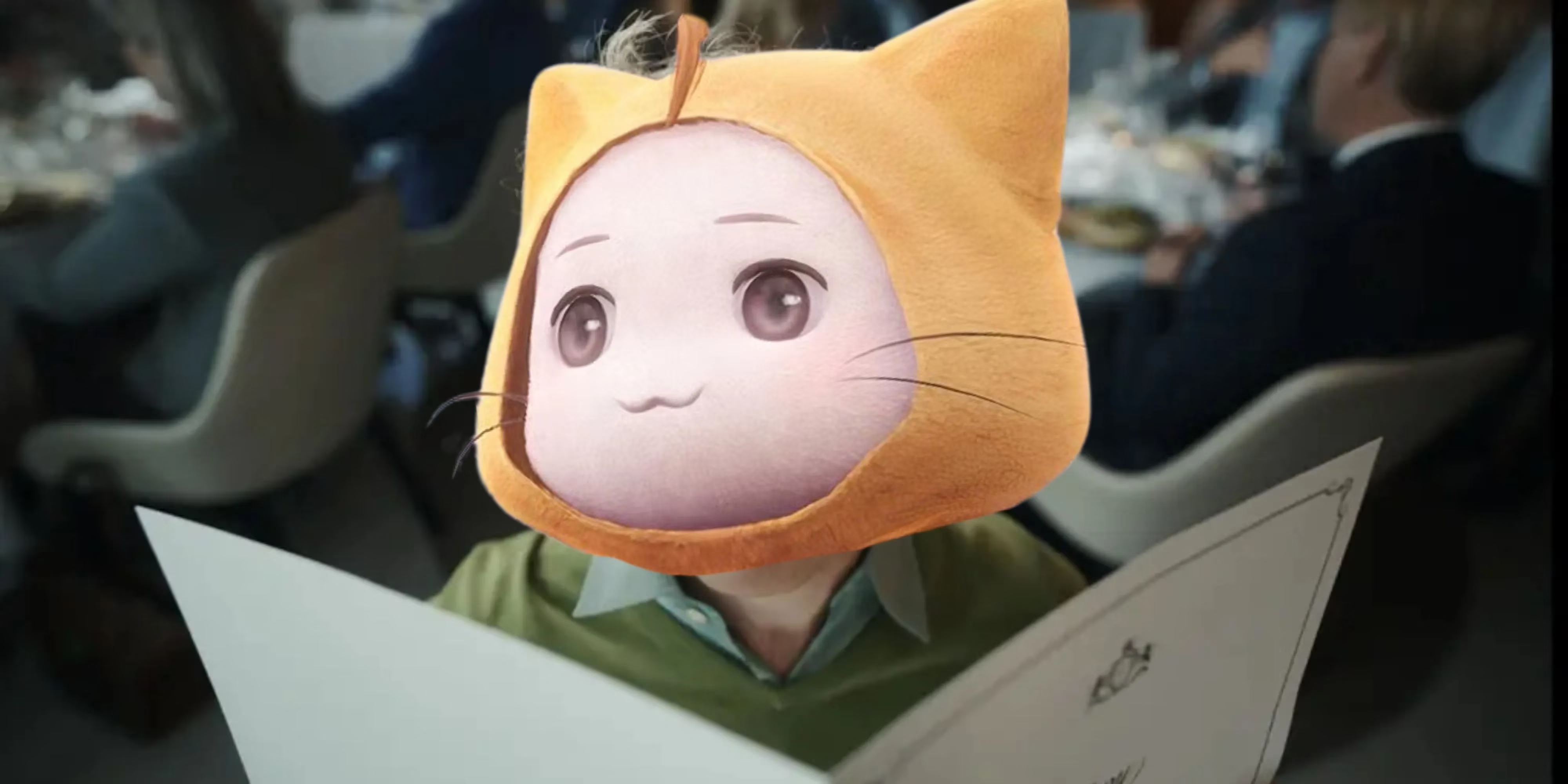
Let's be clear: Infinity Nikki is the definition of a cozy game. Its strength lies in the pure, simple joy of dressing up your character in stunning outfits and exploring pretty landscapes to find hidden collectibles. The moment-to-moment gameplay, when you're actually playing, is a delight. The story? It's... there. It tries to introduce some stakes and villains, but let's be honest, that's not why we're here. We're here to live out a pretty princess fantasy, and the game knows it. It fully embraces its own lack of consequences, and that's perfectly fine!
The problem starts when the game tries to explain how to have this consequenceless fun. The initial tutorial is actually pretty decent! It covers:
-
Basic movement and jumping
-
Simple exploration
-
The very straightforward combat
It's paced well enough that new players won't be overwhelmed, and veterans won't fall asleep. And then... you meet the menus. Oh, the menus.
The Great Menu Avalanche of 2026
First, you get a radial dial for your wardrobe and design tools. Cool, intuitive enough. Then, a second semi-radial dial on the D-pad for your camera and tools. Okay, starting to get a bit cluttered, but I can manage. Then, about an hour in, you're given the Pear-Pal. This thing is less of a tool and more of a digital Russian nesting doll. It's a menu that contains:
-
Task and challenge lists
-
Reward trackers
-
More tutorials
-
Quest logs
-
A lore codex
-
The Store (which, spoiler alert, means microtransactions)
It's a lot. And I mean, a lot a lot. For a game that's supposedly targeting a casual, cozy-seeking audience, it throws an overwhelming amount of system management at you right out of the gate. The worst part? You're forced to interact with every single one of these menus in unskippable tutorial segments. It's like the game is desperately waving its arms and shouting, "HEY! LOOK AT ALL THE STUFF YOU CAN DO (AND BUY)!"

Watching the Magic Fade: A Co-Op Story
Here's the thing—if I were playing solo, I probably would have powered through. I'm numb to gacha currencies and crafting menus at this point; they're just part of the gaming landscape in 2026. But I wasn't playing alone. I was playing with my wife, and watching her experience this menu blizzard was... eye-opening.
My wife is no gaming novice. She conquered Baldur's Gate 3, a game with way more mechanical depth than dressing up a digital doll. But that was a rare exception. Her usual fare is more along the lines of It Takes Two. A big part of her enjoyment in those games was that we were playing together. I was there to help, to explain, to share the experience.
With Infinity Nikki, she was going it alone. I tried to be her guide (my advice was totally helpful, despite what she might claim!), reminding her to grab every crafting resource she ran past. But I couldn't navigate the menus for her. Every ten minutes, like clockwork, the Pear-Pal would light up with a new "feature" and another unskippable tutorial pop-up. It wasn't that the features were overly complex; it was the relentless, disruptive pace of them. The game's core loop—the cozy, fashionable playground—kept getting hijacked by its own insistence on explaining every monetization avenue.
The Gacha in the Room
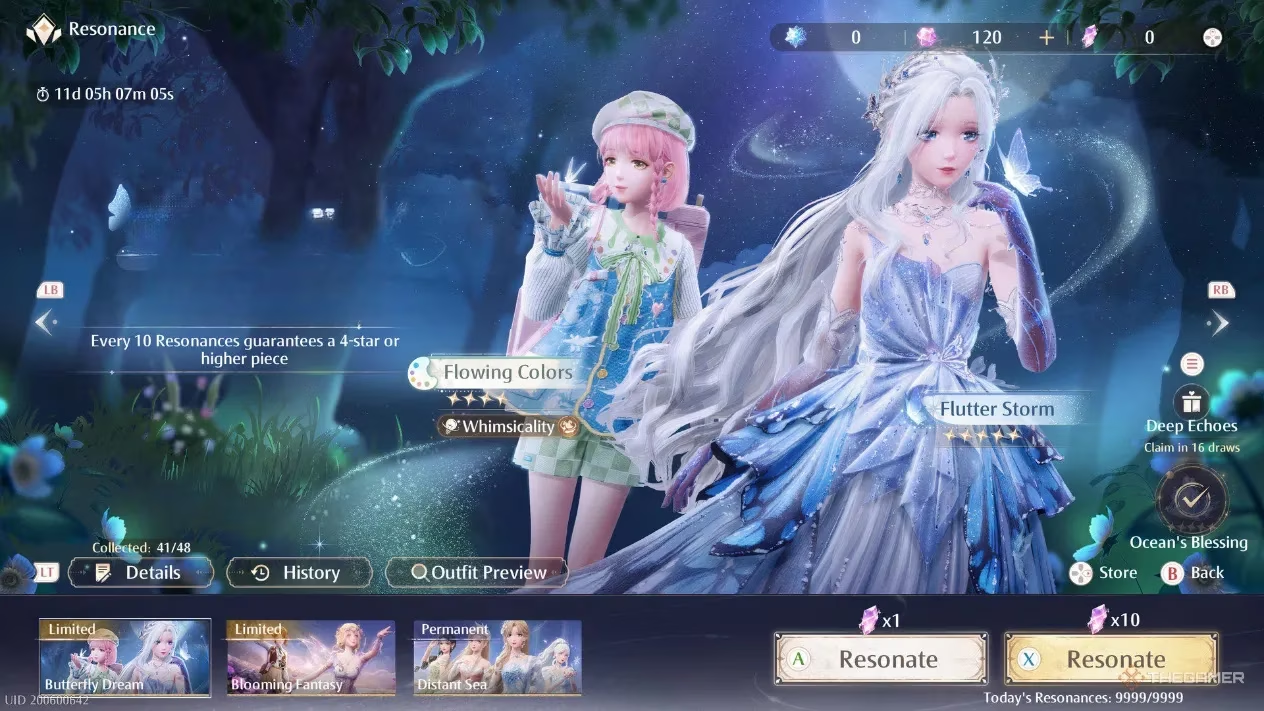
And that's the heart of it, isn't it? The purpose of all this menu complexity becomes crystal clear. For the developers, the gacha pulls are the main attraction. Everything else—the exploring, the dressing, the collecting—feels like a means to an end: earning resources to spin the slot machine and pray for that perfect pastel beret. As a free-to-play title, the game's survival depends on players engaging with these systems. It needs both the big spenders (the whales) and the dedicated free players (the tadpoles) who invest time to keep the community alive.
The tragedy is that this upfront complexity acts as a gatekeeper. My wife, who was genuinely excited about the beautiful worlds and adorable cat companion Momo, soon just handed me the controller. "I'd rather just watch you play," she said. I tried to encourage her to push through, but the constant tutorial interruptions had drained all the "cozy" right out of the experience. The game, in its hunger to funnel players toward its store, had pushed away a player who would have loved its core dress-up fantasy.
Final Thoughts in 2026
It's a real shame. After a near-perfect introduction to the actual gameplay, Infinity Nikki stumbles hard by burying its charming heart under a snowstorm of systems and sales pitches. It's an unfortunate reminder that in today's gaming landscape, it doesn't matter if a game is "about something" or "about nothing." In the end, they all have to be about the same thing: sustainability and, ultimately, revenue. The game does have moments where it shines as that casual fashion playground it promises to be. But for every player who perseveres, I worry there's another—like my wife—who gets lost in the menus before ever finding the magic. In trying to be everything to everyone, it risks pushing away the very audience it was designed to comfort.
Comments